
Slopaganda: The Inauthentic YouTube Network Selling Secession to Albertans
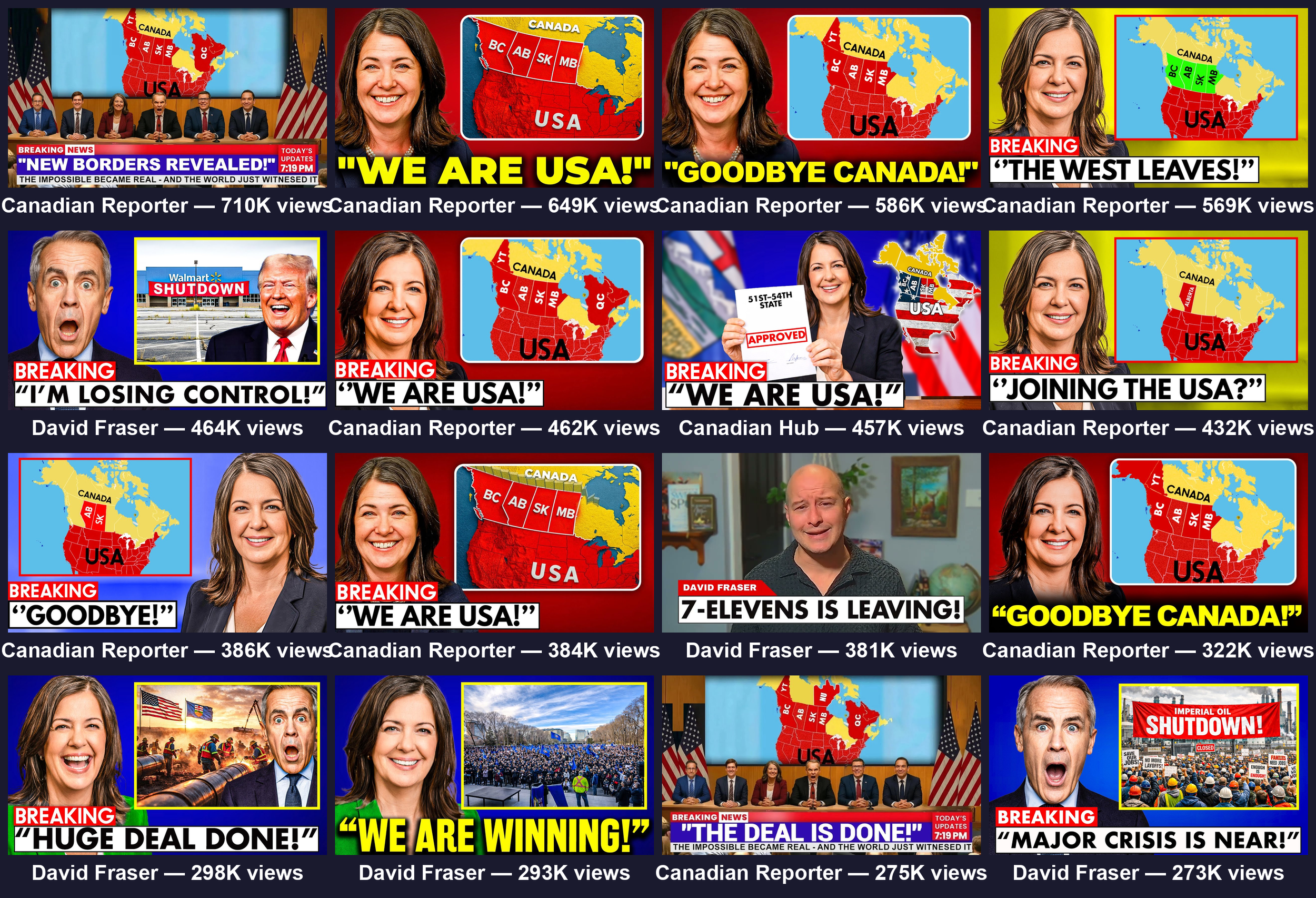
A new incident response report from the Canadian Digital Media Research Network (CDMRN) identifies a coordinated network of 20 inauthentic YouTube channels targeting Albertan audiences with nearly 40 million views, exploiting real grievances to push narratives that normalize secession and even U.S. annexation.
April 21, 2026
With a potential Alberta referendum on the horizon, the CDMRN is releasing Slopaganda, a incident response report documenting a network of inauthentic YouTube channels producing coordinated, templated content designed to look like authentic Albertan political commentary, while being produced by people with no discernible connection to Alberta or its politics.
Alberta's place in Confederation is one of the most consequential political questions Canadians will face in 2026. This report takes no position on that question. What it documents is an unknown actor inserting itself into that debate, amplifying grievances, and steering the conversation toward U.S. annexation.
“Conversations about Canada’s future are important to be had between authentic people with real opinions. Albertans deserve to have this one on their own terms, with accurate information, not content designed to exploit their grievances for clicks. “
- Chris Ross, Senior Analyst, Media Ecosystem Observatory
Key Takeaways:
A network of inauthentic YouTube accounts is targeting Albertan audiences, exploiting genuinely-held grievances and repurposing them to advance narratives that normalize the prospect of secession and U.S. annexation.
These YouTube accounts perform an Albertan perspective, but we find no evidence to suggest any of them are. The AI avatars or paid American voice actors featured in these videos frequently mispronounce, miscontextualize, and misunderstand the politics they cover.
These videos contain frequent and obvious lies, drawing on real news stories to reach exaggerated conclusions designed to exploit political divisions.
We cannot confirm this network's origin or intent, and the available evidence is inconclusive on both counts. The potential scale of a daily political operation targeting Albertans and Canadians nonetheless compelled us to publish these findings without delay.
“The channels analyzed here have accumulated more than double the reach of the Tenet Media network, a Russian-funded influence operation exposed in 2024. The origin of the present network remains unknown. What is clear is that the scale of this content, combined with the timing of a potential October referendum, makes this a matter of urgent public interest.” - Aengus Bridgman, Director of the Media Ecosystem Observatory
The report calls on YouTube to take five concrete steps: disclose geographic audience analytics for flagged channel networks; provide transparency into whether paid promotion or ad targeting directed content toward specific regions; share account creation and ownership history for channels identified as part of coordinated inauthentic networks; extend community notes to YouTube; and grant accredited researchers API access sufficient to distinguish organic engagement from coordinated activity.
You can read the full report here.
The CDMRN’s incident response protocol is designed to help provide rapid awareness of and insights on information incidents, enable learning from these incidents, and enhance resilience within Canada’s information ecosystem, equipping Canadians to navigate the challenges of the digital age effectively.
About the Canadian Digital Media Research Network: The CDMRN is a pioneering initiative led by the Media Ecosystem Observatory, an interdisciplinary collaboration between McGill University and the University of Toronto PEARL that studies information ecosystem health.
For media inquiries, please contact:
Isabelle Corriveau, Associate Director, Public Engagement
Media Ecosystem Observatory ︱Centre for Media, Technology and Democracy